1
/
of
1
naturasounds
🎧 Medicinal Chant of Melissa officinalis - Lemon Balm - 429.62 Hz H20 / 30 minutes
🎧 Medicinal Chant of Melissa officinalis - Lemon Balm - 429.62 Hz H20 / 30 minutes
Regular price
€15,00 EUR
Regular price
Sale price
€15,00 EUR
Unit price
/
per
Taxes included.
Shipping calculated at checkout.
Couldn't load pickup availability
These sound essential oils are available for free listening and for sale, with proceeds benefiting our research in electrophysiology and molecular sound chemistry.
Thank you for your wonderful participation!
These melodies are produced by the plant itself and its molecular activity, which we measure and record.
I encoded it in .wav format with a sampling frequency of 48Khz in 24 bit and tuned it according to the calculations of the Einstein / Planck equation (h.f = mc2) to the frequency of water at 429.62 Hz. Lasting 30 minutes for better immersion with the spirit of lemon balm.
Enjoy listening!
For any further information, collaboration/partnership requests or other inquiries, please send me a message.
contact: renaud@naturasounds.org
Thank you for your wonderful participation!
These melodies are produced by the plant itself and its molecular activity, which we measure and record.
I encoded it in .wav format with a sampling frequency of 48Khz in 24 bit and tuned it according to the calculations of the Einstein / Planck equation (h.f = mc2) to the frequency of water at 429.62 Hz. Lasting 30 minutes for better immersion with the spirit of lemon balm.
Enjoy listening!
For any further information, collaboration/partnership requests or other inquiries, please send me a message.
contact: renaud@naturasounds.org
Botanical classification: Lamiaceae family
Forms and preparations: essential oils, stems, leaves, flowers, capsules, infusions, extracts
Medicinal properties of lemon balm
Internal use
Treatment of nervous disorders: stress, anxiety, panic attacks, nervous breakdowns.
Antispasmodic effects: stomach and colon spasms.
Sleep disorders: insomnia.
Heart problems: tachycardia.
Gastric disorders: excess stomach acidity.
Improves blood circulation: vessel dilation or constriction.
External use
Fights viral infections: oral and genital herpes, shingles. Neuralgia and minor injuries. Muscle and nerve relaxation: tense muscles and nerves.
Usual therapeutic indications
Calming (nervous disorders, stress, anxiety, panic), antispasmodic (stomach, intestine), viral infections (herpes, shingles), heart problems (tachycardia), sleep disorders (insomnia), digestive, memory stimulant, external injuries and neuralgia, body protector.
Other demonstrated therapeutic indications
Treatment of colic in babies (in combination with other antispasmodic plants), treatment of oral herpes (reduction of skin lesion size), treatment of genital herpes (prevents virus development), treatment of agitation and anxiety (calming effect of essential oil), treatment of sleep disorders (improvement of sleep quality), minor gastrointestinal disorders (colic, digestive problems), anti-inflammatory and antibacterial, treatment of heart conditions (tachycardia), protective effect on the body (relaxes muscles and nervous system).
History of lemon balm use in herbal medicine
Lemon balm is a plant native to the eastern Mediterranean basin (Turkey) and found in all temperate climates worldwide. Its use as a medicinal plant dates back to Theophrastus and Hippocrates in ancient Greece. At the time, its benefits for calming anxious people and alleviating nervous disorders were already recognized. Arabs used it as an antispasmodic, and Europeans as a digestive, calming agent, and antiviral treatment. In the contemporary world, lemon balm is used in herbal medicine to treat anxiety and nervous disorders, as well as gastrointestinal problems. It is also used for its stimulating effect on brain function and its effectiveness in treating insomnia.
Botanical description of lemon balm
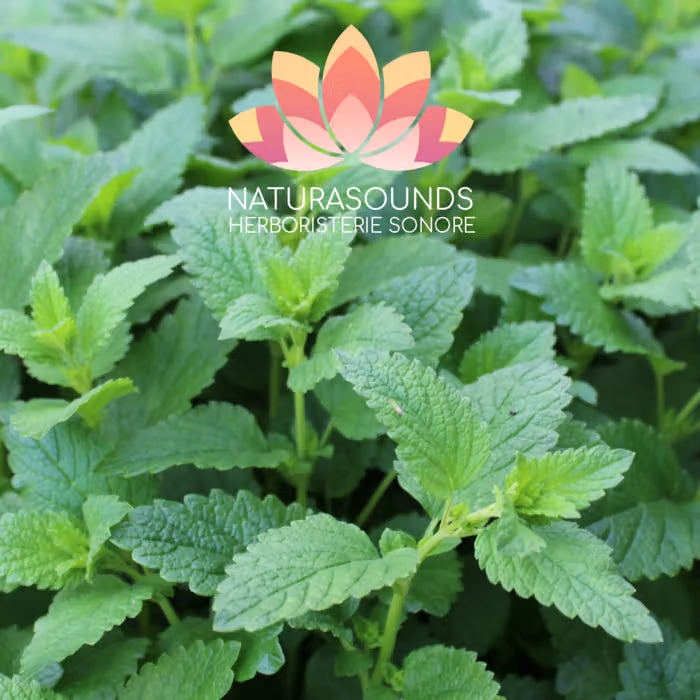
Lemon balm is a perennial, bushy plant, measuring from 30 cm to 80 cm in height. Its upright, square-sectioned stems are branched and pubescent. Its leaves, pale green on the underside and brighter on the upper side, are opposite, oval, and petiolate. Rough to the touch, they release a slightly lemony scent when crushed. The white or pink flowers are inserted in the axils of the leaves. They are bell-shaped and release nectar appreciated by bees. The fruit is a brown tetrakene, containing dark brown and shiny seeds. There are several variants of licorice: aura, citronella, lemonella, lime, etc. The plant grows well in fresh soil, whether exposed to sun or shade.
Composition of lemon balm
Parts used
The leaves, stems, and flowers are the parts used in herbal medicine.
Active ingredients
Terpenic aldehydes (citral, citronellal), terpenic alcohols (eugenol, geraniol, linalool, citronellol), sesquiterpenes (caryophyllene).
Terpenic aldehydes have antiviral, calming, and sedative properties. They are also hypotensive, stomachic, anti-inflammatory, and antibacterial agents. Terpenic alcohols have a neurotonic, hepatostimulant, and immunomodulatory effect. They also have positive effects on emotional and psychological states. The caryophyllene contained in sesquiterpenes has anti-inflammatory, anti-colitic, and antispasmodic properties.
Use and dosage of lemon balm
Dosage
- For the treatment of nervous and digestive disorders, lemon balm can be taken in several forms: 1.5 to 4.5 g (1 to 3 times a day) of dried aerial parts (leaves, flowers) of the plant; 2 to 4 ml of liquid extract (3 times a day); 2 to 6 ml of mother tincture (3 times a day).
- For the treatment of agitation, anxiety, and insomnia, gently apply lemon balm essential oil to the temples and arms. You can also dilute 10 drops of this essential oil in a soap to incorporate into a warm bath.
- For the treatment of oral herpes, use a cream containing 1% lyophilized aqueous extract of lemon balm, 2 to 4 times a day, or make compresses with an infusion.
- For the treatment of minor injuries and neuralgia, apply 5 drops of essential oil mixed with 1 teaspoon of olive oil to the painful area. Apply 2 to 4 times a day.
Precautions for use of lemon balm
It is always preferable to seek the advice of a specialist before starting treatment with lemon balm.
Contraindications
Due to the lack of substantial documentation on the matter, lemon balm is not recommended for children, pregnant women, or breastfeeding women.
Side effects
No known side effects.
Interactions with medicinal plants or supplements
No interactions with plants have been reported to date. But its sedative action could be amplified by the simultaneous intake of other calming plants.
Interactions with medications
Possible interaction with sedatives and tranquilizers. Potential inhibitor of thyroid disorder medications.
Doctor's opinion
Recognized benefits
The effectiveness of lemon balm has been demonstrated against nervous breakdowns, anxiety, and panic. It has a protective effect on the body, relieving nervous tension, the heart, and the digestive system. Overall, the action of lemon balm tends to relax the entire body, muscles and nervous system, to create a feeling of well-being. It can be taken as a preventive treatment, respecting the prescribed doses.
Warning
Taking lemon balm can enhance the effects of alcohol on the body. Therefore, it is not recommended to consume alcohol during treatment with lemon balm-based products.
Research on lemon balm
Research on the use of lemon balm in herbal medicine is quite varied. It focuses, in particular, on the treatment of infantile colic, herpes (oral and genital), and sleep disorders. Studies have also looked at its action in the treatment of gastrointestinal disorders, anxiety, and agitation.
Forms and preparations: essential oils, stems, leaves, flowers, capsules, infusions, extracts
Medicinal properties of lemon balm
Internal use
Treatment of nervous disorders: stress, anxiety, panic attacks, nervous breakdowns.
Antispasmodic effects: stomach and colon spasms.
Sleep disorders: insomnia.
Heart problems: tachycardia.
Gastric disorders: excess stomach acidity.
Improves blood circulation: vessel dilation or constriction.
External use
Fights viral infections: oral and genital herpes, shingles. Neuralgia and minor injuries. Muscle and nerve relaxation: tense muscles and nerves.
Usual therapeutic indications
Calming (nervous disorders, stress, anxiety, panic), antispasmodic (stomach, intestine), viral infections (herpes, shingles), heart problems (tachycardia), sleep disorders (insomnia), digestive, memory stimulant, external injuries and neuralgia, body protector.
Other demonstrated therapeutic indications
Treatment of colic in babies (in combination with other antispasmodic plants), treatment of oral herpes (reduction of skin lesion size), treatment of genital herpes (prevents virus development), treatment of agitation and anxiety (calming effect of essential oil), treatment of sleep disorders (improvement of sleep quality), minor gastrointestinal disorders (colic, digestive problems), anti-inflammatory and antibacterial, treatment of heart conditions (tachycardia), protective effect on the body (relaxes muscles and nervous system).
History of lemon balm use in herbal medicine
Lemon balm is a plant native to the eastern Mediterranean basin (Turkey) and found in all temperate climates worldwide. Its use as a medicinal plant dates back to Theophrastus and Hippocrates in ancient Greece. At the time, its benefits for calming anxious people and alleviating nervous disorders were already recognized. Arabs used it as an antispasmodic, and Europeans as a digestive, calming agent, and antiviral treatment. In the contemporary world, lemon balm is used in herbal medicine to treat anxiety and nervous disorders, as well as gastrointestinal problems. It is also used for its stimulating effect on brain function and its effectiveness in treating insomnia.
Botanical description of lemon balm
Lemon balm is a perennial, bushy plant, measuring from 30 cm to 80 cm in height. Its upright, square-sectioned stems are branched and pubescent. Its leaves, pale green on the underside and brighter on the upper side, are opposite, oval, and petiolate. Rough to the touch, they release a slightly lemony scent when crushed. The white or pink flowers are inserted in the axils of the leaves. They are bell-shaped and release nectar appreciated by bees. The fruit is a brown tetrakene, containing dark brown and shiny seeds. There are several variants of licorice: aura, citronella, lemonella, lime, etc. The plant grows well in fresh soil, whether exposed to sun or shade.
Composition of lemon balm
Parts used
The leaves, stems, and flowers are the parts used in herbal medicine.
Active ingredients
Terpenic aldehydes (citral, citronellal), terpenic alcohols (eugenol, geraniol, linalool, citronellol), sesquiterpenes (caryophyllene).
Terpenic aldehydes have antiviral, calming, and sedative properties. They are also hypotensive, stomachic, anti-inflammatory, and antibacterial agents. Terpenic alcohols have a neurotonic, hepatostimulant, and immunomodulatory effect. They also have positive effects on emotional and psychological states. The caryophyllene contained in sesquiterpenes has anti-inflammatory, anti-colitic, and antispasmodic properties.
Use and dosage of lemon balm
Dosage
- For the treatment of nervous and digestive disorders, lemon balm can be taken in several forms: 1.5 to 4.5 g (1 to 3 times a day) of dried aerial parts (leaves, flowers) of the plant; 2 to 4 ml of liquid extract (3 times a day); 2 to 6 ml of mother tincture (3 times a day).
- For the treatment of agitation, anxiety, and insomnia, gently apply lemon balm essential oil to the temples and arms. You can also dilute 10 drops of this essential oil in a soap to incorporate into a warm bath.
- For the treatment of oral herpes, use a cream containing 1% lyophilized aqueous extract of lemon balm, 2 to 4 times a day, or make compresses with an infusion.
- For the treatment of minor injuries and neuralgia, apply 5 drops of essential oil mixed with 1 teaspoon of olive oil to the painful area. Apply 2 to 4 times a day.
Precautions for use of lemon balm
It is always preferable to seek the advice of a specialist before starting treatment with lemon balm.
Contraindications
Due to the lack of substantial documentation on the matter, lemon balm is not recommended for children, pregnant women, or breastfeeding women.
Side effects
No known side effects.
Interactions with medicinal plants or supplements
No interactions with plants have been reported to date. But its sedative action could be amplified by the simultaneous intake of other calming plants.
Interactions with medications
Possible interaction with sedatives and tranquilizers. Potential inhibitor of thyroid disorder medications.
Doctor's opinion
Recognized benefits
The effectiveness of lemon balm has been demonstrated against nervous breakdowns, anxiety, and panic. It has a protective effect on the body, relieving nervous tension, the heart, and the digestive system. Overall, the action of lemon balm tends to relax the entire body, muscles and nervous system, to create a feeling of well-being. It can be taken as a preventive treatment, respecting the prescribed doses.
Warning
Taking lemon balm can enhance the effects of alcohol on the body. Therefore, it is not recommended to consume alcohol during treatment with lemon balm-based products.
Research on lemon balm
Research on the use of lemon balm in herbal medicine is quite varied. It focuses, in particular, on the treatment of infantile colic, herpes (oral and genital), and sleep disorders. Studies have also looked at its action in the treatment of gastrointestinal disorders, anxiety, and agitation.
Partager