1
/
of
1
naturasounds
🎧 Medicinal Chant of Lavandula angustifolia - Lavender - 429.62 Hz H20 / 30 minutes
🎧 Medicinal Chant of Lavandula angustifolia - Lavender - 429.62 Hz H20 / 30 minutes
Regular price
€15,00 EUR
Regular price
Sale price
€15,00 EUR
Unit price
/
per
Taxes included.
Shipping calculated at checkout.
Couldn't load pickup availability
These sound essential oils are available for free listening and for sale to benefit our research in electrophysiology and molecular sound chemistry.
Thank you for your wonderful participation!
These melodies are produced by the plant itself and its molecular activity, which we measure and record.
I encoded it in .wav format with a sampling rate of 48Khz at 24 bit and tuned it according to Einstein / Planck's equation (h.f = mc2) calculations on the frequency of water at 429.62 Hz. Lasting 30 minutes for a deeper immersion with the spirit of Lavender.
Enjoy listening!
For any further information, collaboration/partnership requests or other, please send me a message.
contact: renaud@naturasounds.org
Thank you for your wonderful participation!
These melodies are produced by the plant itself and its molecular activity, which we measure and record.
I encoded it in .wav format with a sampling rate of 48Khz at 24 bit and tuned it according to Einstein / Planck's equation (h.f = mc2) calculations on the frequency of water at 429.62 Hz. Lasting 30 minutes for a deeper immersion with the spirit of Lavender.
Enjoy listening!
For any further information, collaboration/partnership requests or other, please send me a message.
contact: renaud@naturasounds.org
> Lavandula angustifolia = Fine lavender / true lavender / officinal lavender
Not to be confused with Lavandula latifolia (spike lavender) and Lavandula x burnati (lavandin)
Family: Lamiaceae / wild plant.
Geographical location: Maritime Alps / dry area / between 700 and 2000 meters above sea level.
Parts used: flowers harvested just before the end of flowering
Molecules: True lavender contains nearly 250 molecules; it is therefore the totum of the plant's molecules that gives it its powerful and varied actions. Here are the main ones.
- In the plant: phenolic acids / coumarins / flavonoids / tannins.
- In the essential oil: Linalool, linalyl acetate or more simply monoterpenols, ester.
Method of use: internal and external use possible / pure or diluted essential oil in friction, massage and diffusion / infused / tincture / mother tincture.
Properties: analgesic / soothing / nervous system regulator / antiseptic / anti-inflammatory / anti-spasmodic.
Main indications: anxiety, difficulty falling asleep, nervous headaches, relaxation, spasmodic cough, spasmodic gastric disorders, infected wounds, burns, insect bites, itching.
Precautions for use: as with all essential oils, it is advisable to limit its use in pregnant women and children under 3 years old / in case of prolonged use, dilute it in a vegetable oil.
Energetic dimension: The plant of the heart and compassion - I LOVE
Associated Chakra: the heart, it opens to other horizons by creating space, gives strength by chasing away negative energies.
It allows self-realization, openness to others.
Senses: it awakens and soothes them all at once.
- Smell: floral, sweet, light, fine.
- Hearing: soft and pleasant, we chose the harp to hear its melody
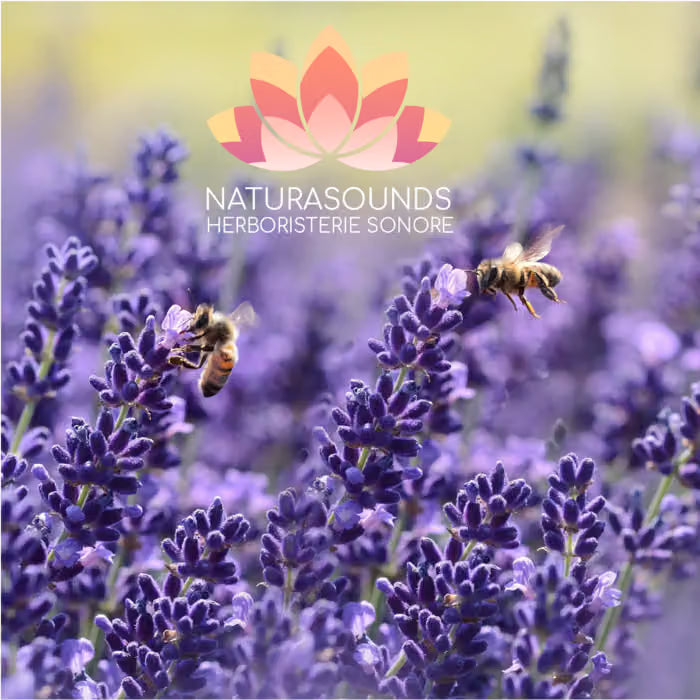
- Sight: pale purple, soft to the eyes, the flowering top seems suspended in the air and its stems recall a powerful anchoring.
- Touch: the stems are slightly hairy, in tufts, its flowers also have this softness. We like to brush them because they reassure and then release this sweet smell
- Taste: powerful, invigorating.
Not to be confused with Lavandula latifolia (spike lavender) and Lavandula x burnati (lavandin)
Family: Lamiaceae / wild plant.
Geographical location: Maritime Alps / dry area / between 700 and 2000 meters above sea level.
Parts used: flowers harvested just before the end of flowering
Molecules: True lavender contains nearly 250 molecules; it is therefore the totum of the plant's molecules that gives it its powerful and varied actions. Here are the main ones.
- In the plant: phenolic acids / coumarins / flavonoids / tannins.
- In the essential oil: Linalool, linalyl acetate or more simply monoterpenols, ester.
Method of use: internal and external use possible / pure or diluted essential oil in friction, massage and diffusion / infused / tincture / mother tincture.
Properties: analgesic / soothing / nervous system regulator / antiseptic / anti-inflammatory / anti-spasmodic.
Main indications: anxiety, difficulty falling asleep, nervous headaches, relaxation, spasmodic cough, spasmodic gastric disorders, infected wounds, burns, insect bites, itching.
Precautions for use: as with all essential oils, it is advisable to limit its use in pregnant women and children under 3 years old / in case of prolonged use, dilute it in a vegetable oil.
Energetic dimension: The plant of the heart and compassion - I LOVE
Associated Chakra: the heart, it opens to other horizons by creating space, gives strength by chasing away negative energies.
It allows self-realization, openness to others.
Senses: it awakens and soothes them all at once.
- Smell: floral, sweet, light, fine.
- Hearing: soft and pleasant, we chose the harp to hear its melody
- Sight: pale purple, soft to the eyes, the flowering top seems suspended in the air and its stems recall a powerful anchoring.
- Touch: the stems are slightly hairy, in tufts, its flowers also have this softness. We like to brush them because they reassure and then release this sweet smell
- Taste: powerful, invigorating.
released May 26, 2020
Fact sheet developed by Camile Delas.
Fact sheet developed by Camile Delas.
Partager